How to Spend a Quiet Afternoon with a Small Collection
Spend a quiet afternoon with a small collection by choosing a simple theme, noticing details and shaping a relaxed pastime that fits your available time.
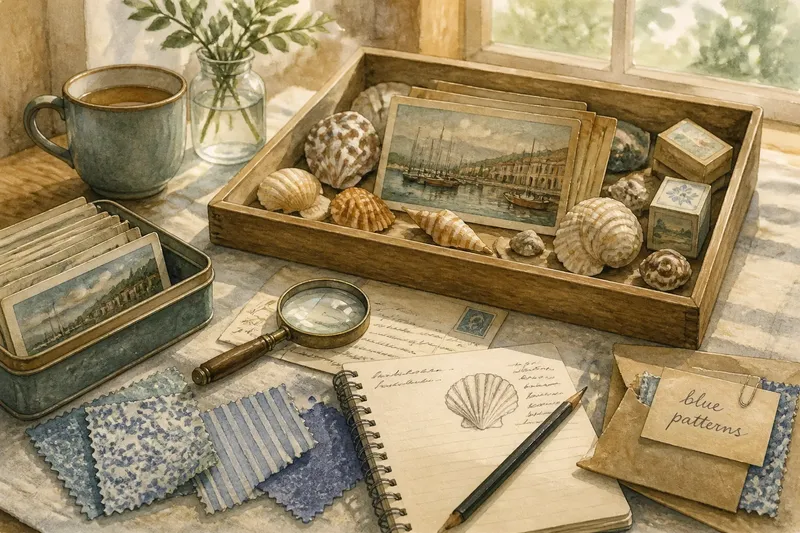
A quiet afternoon with a small collection can become a satisfying pastime when you give it a simple theme. Choose a few postcards, shells, matchboxes or fabric swatches, then spend the session noticing what they bring to mind rather than trying to organise everything.
Choose a theme that gives the afternoon a shape
A theme makes it easier to begin without turning a leisure activity into a sorting project. It might be postcards with railway scenes, shells with ridged surfaces, or fabric samples in colours you associate with a particular room.
Set out a clean table, a soft cloth and a shallow tray. The tray gives loose objects a clear boundary, while the cloth can protect the surface and make small details easier to see.
Decide what will bring the session to a natural close: finishing a cup of tea, looking through one tin, or reaching the end of an album. That gives the pastime a gentle frame without making completion the goal.
Turn looking closely into a pastime
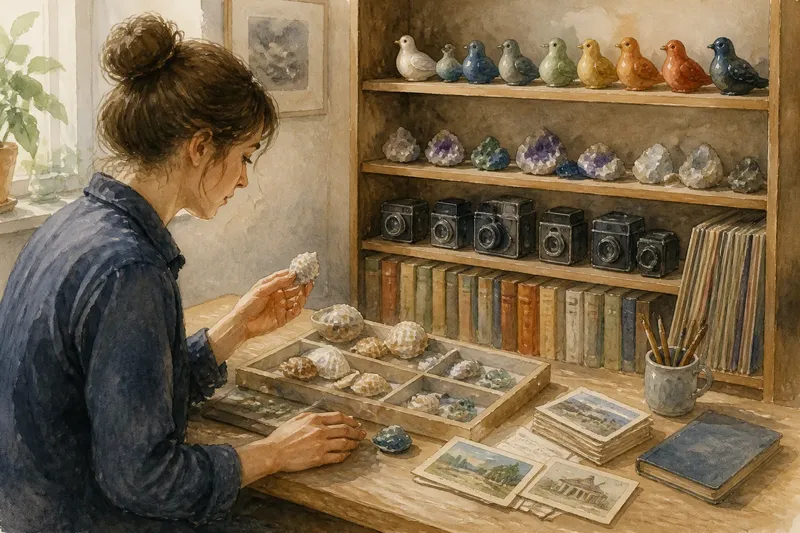
Choose one object and give it your attention for a little while. With a postcard, notice the lettering, the picture’s edges and any marks left by its journey; with a shell, follow its curve and see where its colour changes.
A magnifying glass may make fine print or surface details easier to see. Keep a notebook nearby if you enjoy writing down a place name, a memory or a question, but there is no need to make a record of every item.
Say you have a tin of postcards from several towns and pick one showing a harbour. You read the message, notice that the handwriting runs close to the edge, then jot down the sender’s name in your notebook; the result is a small personal story to return to, rather than a new filing task.
Give the collection a gentle rhythm
Vary the activity so the afternoon does not become a long stretch of silent inspection. You could read a postcard aloud, sketch the outline of a shell, or choose a piece of music that suits the mood of the objects.
If another person is joining you, take turns choosing an item and sharing one thing you notice. A child might look for a repeated colour, while an adult recalls where a postcard came from; each person can contribute without needing specialist knowledge.
Keep drinks away from the objects, and handle delicate pieces by their sturdier edges. Follow any care instructions suited to the material instead of improvising a cleaning method.
Decide what suits your time and energy
If you have a short, uninterrupted spell: Check that one tin or album is within reach; if it is, look through that group, but if not, choose a single object already on display instead of searching through storage.
If you want a creative activity: Check whether you have paper and a pencil beside the objects; if you do, sketch one shape or colour, but if not, describe it aloud or simply trace its outline with your eyes.
If you feel like sharing the pastime: Check whether someone nearby would enjoy taking turns; if so, invite them to choose an object, but if not, write one question about a piece to consider on your own.
If the objects need careful handling: Check whether the surface is clean and stable; if it is, handle only a few pieces at a time, but if not, look at them in place and avoid moving them.
If you would like a memento of the session: Check whether a note or sketch would add pleasure; if so, make one on separate paper, but if it would feel like work, leave the collection as it is.
If you are ready to stop: Check whether the pieces are back in their usual container or place; if they are, leave the table clear, but if not, return them before starting another activity.
How can a collection pastime fit different moods?
What can I do if I want a quiet activity?
Choose one or two objects and look at them without adding another task. A postcard, a smooth stone or a piece of patterned fabric can hold your attention through its image, texture or association.
How can I make the session feel creative?
Use the collection as a prompt for a small drawing, a colour pairing or a short description. Keep the result separate from the objects so the activity does not alter or mark them.
What if I have little time or space?
Use one object or one small album rather than spreading out the whole collection. Leave other pieces where they are, and choose a brief activity such as reading a message or noticing a design.
How can I enjoy the collection with someone else?
Take turns choosing an object and asking a simple question about it, such as what detail stands out or what place it suggests. Sharing impressions keeps the activity conversational, even if neither person knows the object’s history.
Close the session without creating another project
When you are ready to move on, return the objects to their usual box, album or shelf. If a particular piece has caught your attention, leave it somewhere appropriate for the next time you want to look; otherwise, there is no need to change its arrangement.
Imagine you have taken out three fabric swatches but only enjoyed comparing their colours. You put them back in their envelope, then leave a separate note beside it saying “blue patterns”; next time, that cue can help you begin without asking you to reorganise the collection.
A quiet afternoon with a small collection works well when it remains a pastime, not a duty. Let the objects suggest one manageable activity, and let your available time decide when it is enough.