The Myth of the One Perfect Hobby
The one perfect hobby is a misleading ideal. Learn to judge pastimes by fit, curiosity and how comfortably they leave room for other interests.
A hobby does not have to become your defining pastime to deserve a place in your life. The one perfect hobby is a misleading ideal: it turns leisure into a search for a single activity that must suit your personality, fill spare hours and remain satisfying indefinitely. A better measure is whether a pastime fits the time and energy you have, holds your curiosity for now and leaves room for other interests.
The idea of a defining hobby asks too much
People often talk about hobbies as though everyone ought to have a ready answer to “What do you do for fun?” That question can make an activity sound like a personal badge, something to present consistently rather than enjoy on its own terms. Yet a pastime need not explain who you are.
The pressure to choose one can lead to unnecessary tests. Is the activity productive enough? Am I committed enough to call it a hobby? Should I keep going because I have already bought materials or told friends I am learning? These questions shift attention away from the experience itself and towards maintaining a convincing identity.
It is useful to separate an interest from a defining role. You might enjoy sketching plants without becoming “an artist”, or learn a few songs on a keyboard without making music the centre of your leisure. The smaller claim can be more accurate and more freeing.
Fit depends on the shape of your ordinary day
An activity fits when its practical demands make sense alongside the rest of your life. Consider where it happens, how much preparation it asks of you, whether it needs quiet, and whether you can stop and resume without losing the thread. These details often matter more than whether an activity sounds impressive.
For instance, a pastime that requires a clear table may suit someone who has a dedicated corner but frustrate someone who shares a small kitchen. A portable sketchbook, a library book or a short walk may be easier to begin in a busy household. Neither kind of activity is inherently better; the useful question is which one can find a natural opening in your day.
Fit can also change with circumstance. A demanding work period may leave room for reading a few pages but not for a lengthy craft session. That does not mean the craft has stopped being “your thing”. It may simply belong to a different season of your routine.
Curiosity is more useful than a promise of mastery
Curiosity gives you a reason to return without requiring a grand plan. You may want to learn why certain leaves press well, how a melody changes with a different rhythm, or what makes a walking route feel inviting. A small question can sustain attention more gently than the expectation that you must become accomplished.
Try noticing what you are drawn to before you decide what the interest means. If you borrow a book on bird calls, perhaps you enjoy recognising sounds outdoors; perhaps you mainly like the quiet concentration of listening. Either discovery can point towards a fitting pastime, but neither obliges you to adopt a permanent label.
Curiosity also allows an activity to remain modest. You can enjoy making one useful object without setting up a workshop, or learn enough about local trees to notice them on a familiar street. Leisure need not become a course of study unless that is what you want.
Time, cost and space are part of the experience
Practical constraints are not dull details to overcome after choosing a hobby. They shape whether beginning feels inviting. Materials that need careful storage, equipment that takes time to set up, or a venue that is awkward to reach can alter the pleasure of an activity before you even start.
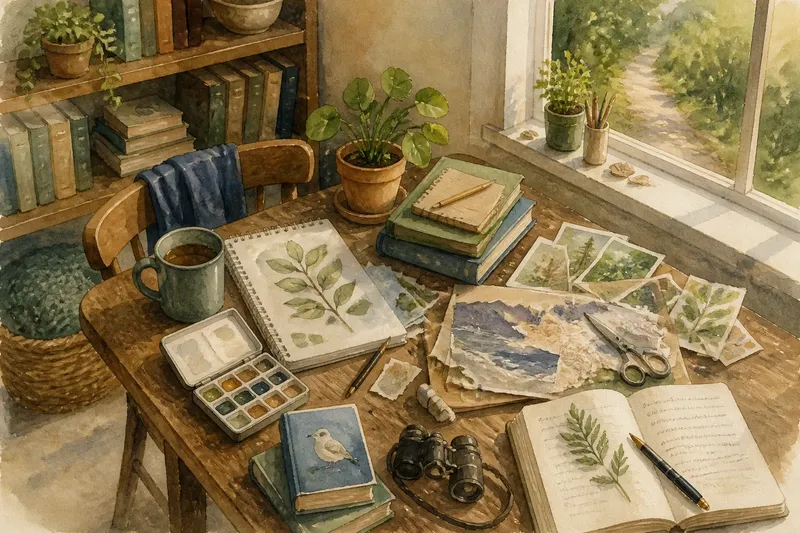
It can help to consider the lightest workable version. If you are interested in watercolour, a small pad and a compact set may be enough to find out whether mixing colours appeals to you. If you are curious about gardening but lack outdoor space, a windowsill pot might reveal whether tending plants is satisfying. The point is not to imitate a full-scale version but to meet the interest in a form your circumstances can accommodate.
Say you have a crowded week and feel drawn to making collages. You set aside a folder for scrap paper, glue and a pair of scissors, then work at the kitchen table when it is free; the expected observable result is that you can make a small image without needing a permanent studio or a long session. If the activity feels cramped, that is useful information about the format, not a verdict on your imagination.
How can you tell whether a pastime suits you?
Do I look forward to starting?
Notice whether the thought of beginning brings interest, calm or a pleasant sense of focus. If you mostly dread the preparation, consider changing the setup or trying a different activity rather than scolding yourself into persistence.
Do I enjoy the activity while I am doing it?
Pay attention to the actual experience, not just the finished object or the idea of being good at it. A pastime may be worthwhile because it makes an hour absorbing, even if the result is ordinary.
Does it fit the time and space I can offer?
Look at the room, materials and interruptions the activity asks you to manage. A smaller version or a different setting may suit you better than abandoning an interest altogether.
Can I set it aside without feeling I have failed?
A flexible pastime can pause when other parts of life need attention. If stopping feels like breaking a promise, ask whether you have chosen the activity freely or turned it into another obligation.
Make room for more than one kind of leisure
Different pastimes answer different needs. Reading may offer solitude, a walk may bring you outdoors, and a card game may make time with friends easier. Expecting one activity to supply all of these can make a perfectly good interest seem inadequate.
A small mix can be easier to sustain than an all-purpose hobby. You might keep one activity that works in short bursts, another for a quieter stretch of time and a social option that depends on other people being available. This is not a schedule to obey; it is a way to notice that leisure can take several shapes.
Leave some unclaimed time, too. If every free moment is assigned to an activity, curiosity has little chance to appear on its own. An open evening or a slow weekend morning can be useful precisely because you have not decided in advance what it must become.
Let an interest change without turning it into a verdict
Enjoyment is not a contract. A pastime can be absorbing for a while, then fade as your attention shifts. You may also discover that you like one part of it—choosing colours, finding a route, sharing the activity—more than the rest. That is a refinement of your preferences, not evidence that you chose badly.
When an interest loses its pull, pause before deciding you must either recommit or give it up forever. You could put the materials away, borrow rather than buy what you need, or try the activity in a different setting. The aim is to respond honestly to what you enjoy now, not to defend an old description of yourself.
There is no need to rank your interests by seriousness. Collecting a few interesting stones on a walk, learning a simple recipe or practising a tune can all give free time character without becoming a lifelong pursuit. If someone asks what you do for fun, you can name what currently appeals to you and leave the answer open to change.
The one perfect hobby is less useful than a pastime that fits the day in front of you. Treat fit, curiosity and available space as questions to revisit, and let the answer change when your circumstances do. That leaves leisure free to be enjoyable rather than another standard you have to meet.